A national project of the Office of the President
Liberia Peace, Reconciliation and Memorial Museum
A national home for the memory of Liberia's civil conflicts. We honour those we lost, tell the story truthfully, and teach peace to every generation that follows.
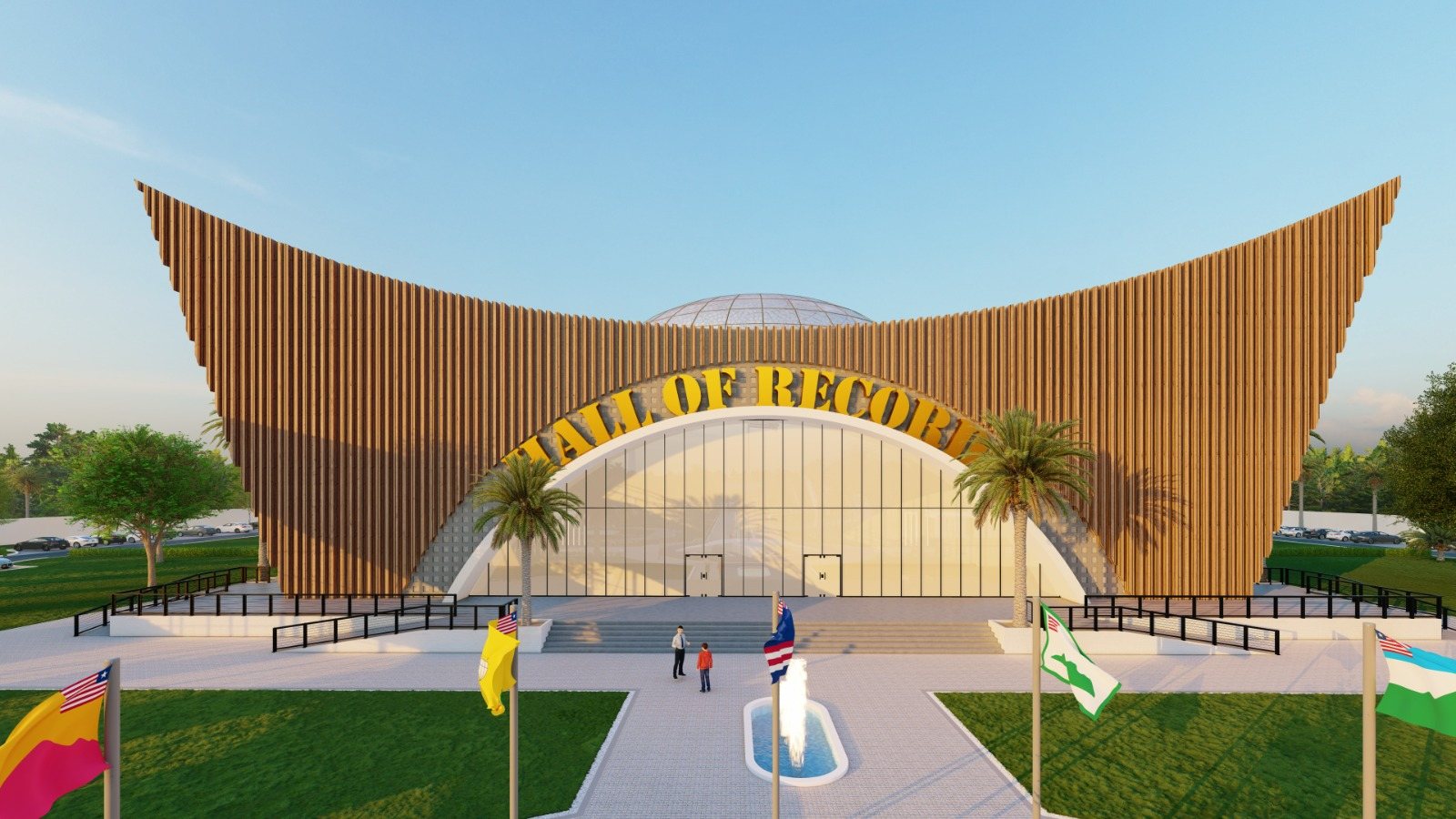
Every face, a life remembered.Architectural concept of the Hall of Records, the museum's main building. Portraits shown are illustrative; the finished memorial will carry photographs shared by families, with their consent.
Start here
Your visit, in four steps
Decoration Day
Counting down to Decoration Day
Since 1916, Liberians have set aside the second Wednesday of March to honour their dead, cleaning and decorating the graves of family and friends. The museum joins in remembering everyone lost in the civil wars.
Lay a virtual wreath in memory of all who were lost.
Where presidents lay the national wreath →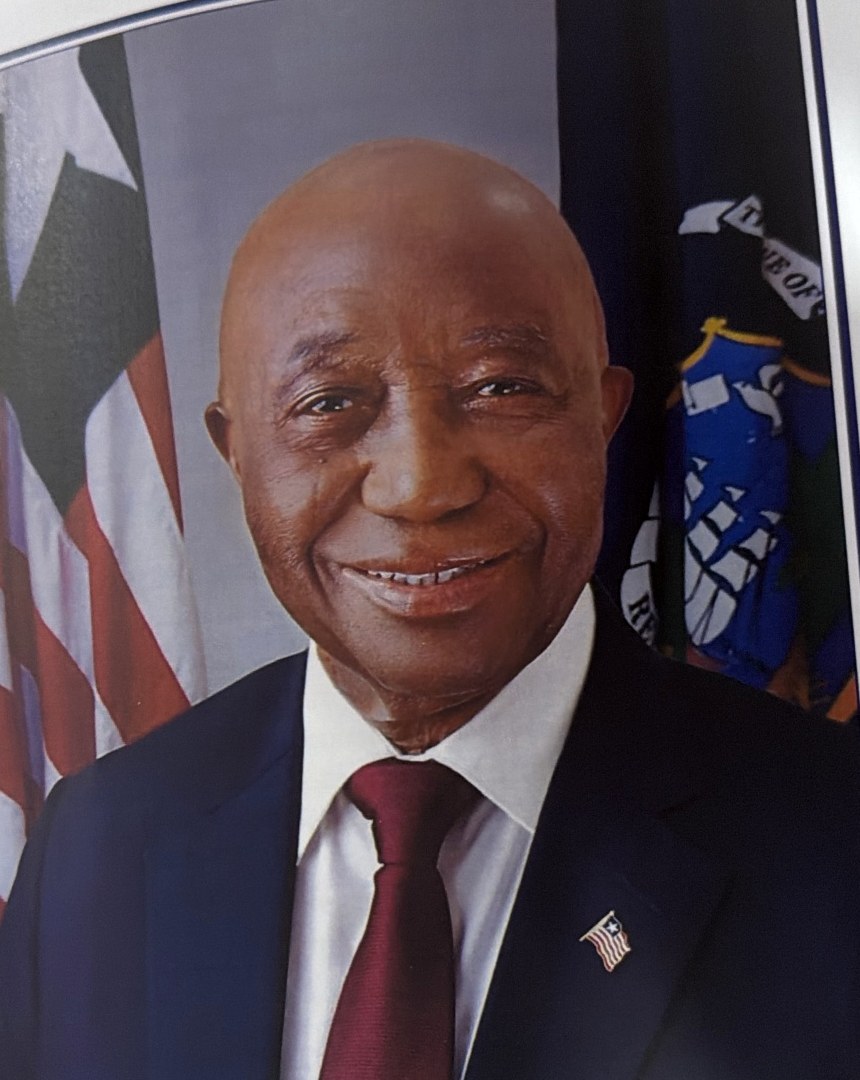
From the President's message (draft)
"When our young people walk through these galleries, I want them to understand what war cost us, and what peace asks of each of us every day."
Read the full message
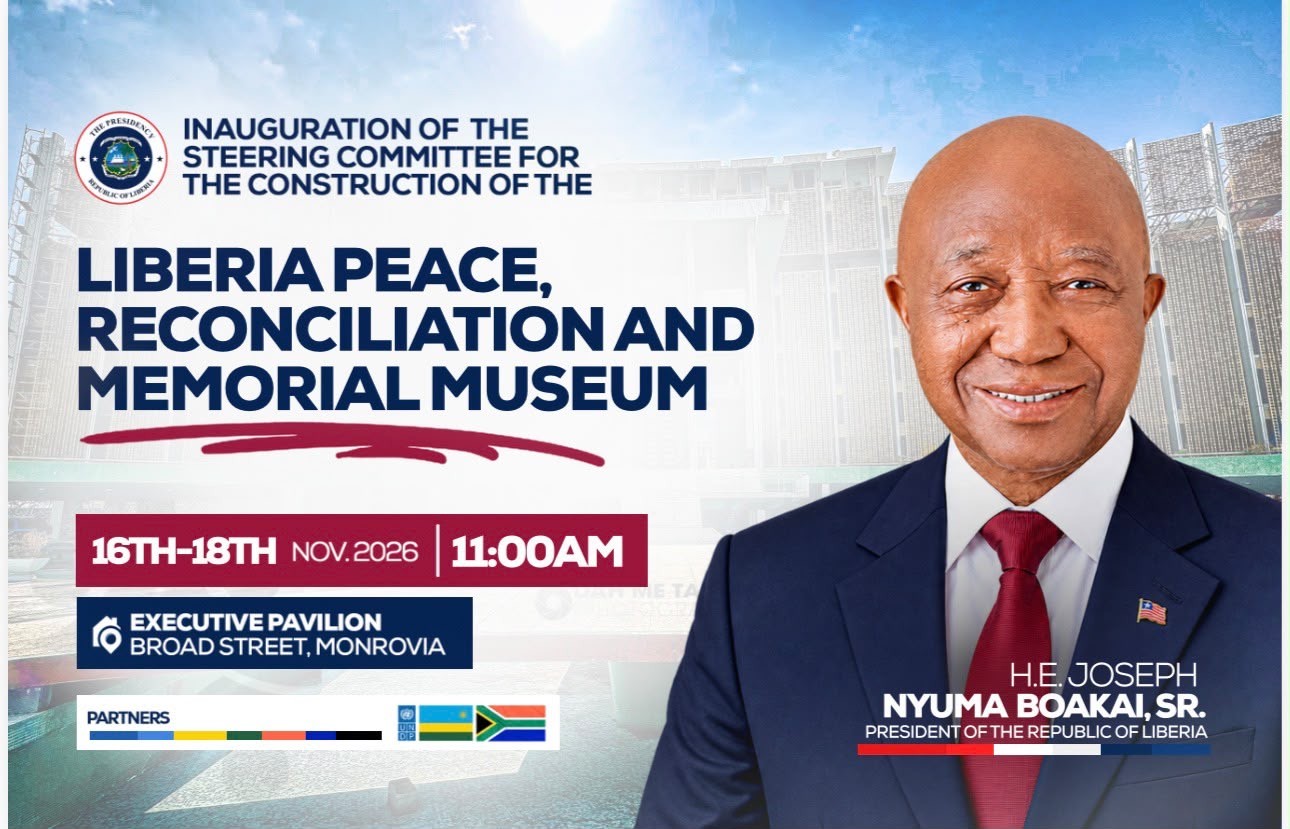
Inaugurated 16 to 18 November 2026 · Executive Pavilion, Monrovia
The Steering Committee has begun its work
The Inaugural Steering Committee Meeting launched the museum as a national project. Its five Technical Working Groups now take the project forward.
Walk the virtual museum
Five galleries in 3D, open now on any phone or computer.
Explore the county map
What happened in each of Liberia's 15 counties, and where memorials are planned.
Light a candle
Find a name on the Memorial Wall and leave a tribute.
Share a story
Add your testimony, safely and with your consent.
Learning from Rwanda and South Africa
How two nations built memorials for reconciliation.
A message from the President
Remembering together, so that we never repeat
Draft message for approval by the Office of the PresidentFellow Liberians, at home and abroad, and friends of Liberia: for fourteen years our nation lived through war. Families were broken, communities scattered, and a generation of our children grew up knowing fear before they knew peace.
We cannot change what happened. But we can choose how we remember it. This museum will be a place where every life we lost is honoured by name, where the truth is told with care, and where survivors are heard with respect.
Remembering is not about reopening wounds. It is how a nation heals honestly. When our young people walk through these galleries, I want them to understand what war cost us, and what peace asks of each of us every day.
I thank our brothers and sisters of Rwanda and South Africa, who have walked this road before us and share their experience freely, and the United Nations Development Programme for standing with Liberia.
I invite every Liberian to take part: share your story, add the name of someone you lost, and help us build a memorial worthy of them.
Joseph Nyuma Boakai, Sr.
President of the Republic of Liberia
Governance
The Steering Committee
The Steering Committee leads the museum as a national project. It sets direction, approves the plan and budget, and oversees the five Technical Working Groups.
Committee members
Technical Working Group leads
See each group's mandate, decisions and members
International partners and Secretariat
Names, titles and photographs to be supplied by the Project Secretariat.
Technical Working Groups
Five groups, one national museum
The five Technical Working Groups turn what Liberia learned on its study missions to Rwanda and South Africa into a practical, Liberian-owned framework for the Museum. Each works from the Concept Note and sets out what to adopt, what to change, what needs research, and what should happen within 90, 180 and 365 days.
International expertise, Liberian ownership.
Rwanda and South Africa help Liberia learn from their experience. Liberians determine Liberia's historical narrative, priorities, institutions and national memory.
Milestones
How every group reports
No group submits a general narrative report. Every issue is brought to the Steering Committee in the same form:
- Issue What problem or decision is before us?
- Proposed position What should Liberia do?
- Options What are the realistic alternatives?
- Recommendation Which option does the Group recommend?
- Decision required What exactly should the Steering Committee approve?
- Responsible institution Who owns the next step?
- Timeframe When should it be completed?
- Resource implication What will it approximately require?
- Partners Which Liberian and international institutions should support it?
Source: Terms of Reference for the five Technical Working Groups, draft for adoption by the Steering Committee on Wednesday, 18 November 2026. Groups report through the Project Secretariat in the Office of the Minister of State without Portfolio. Costs are covered under the implementation budget of US$4,570,020 (16 November 2026 to 31 December 2027).
Walk through the museum
Tour the grounds as the architects have designed them, then step inside five galleries in 3D. Everything here is open to anyone with a phone or computer, before the physical museum is built.
Site tour · 29 stops
Walk the grounds
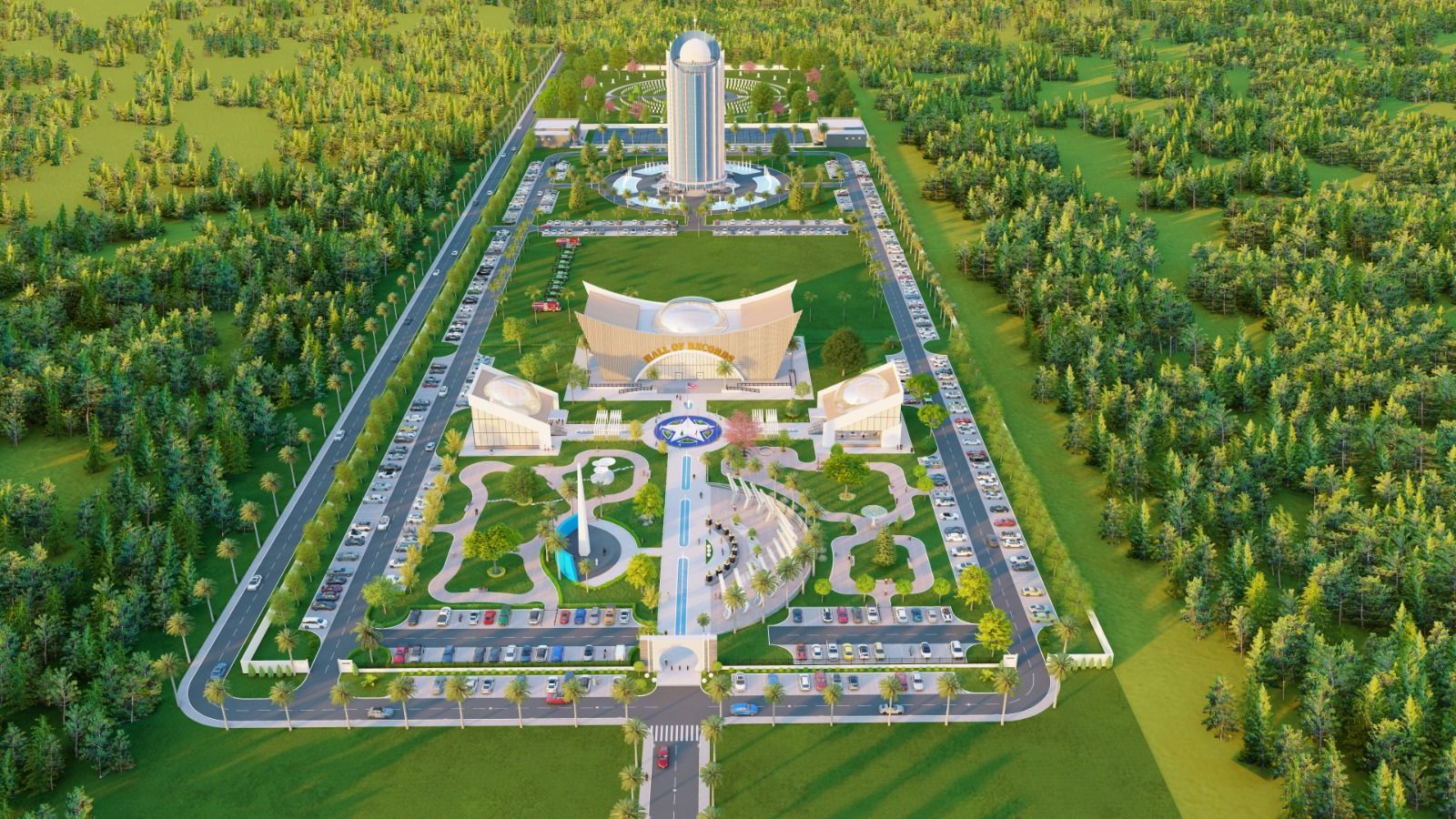
Follow the path a visitor will take: from the main gate, through the memorial gardens and the Hall of Records, past the parade ground to the Memorial Tower and Heroes Park. Use the arrows, swipe, or pick a place on the map.
Arrival
The site from above
Look for the gold markers on some pictures: tap one to learn more.
Architectural concept renderings and site plan (March 2026). The final design may change.
Plan to picture
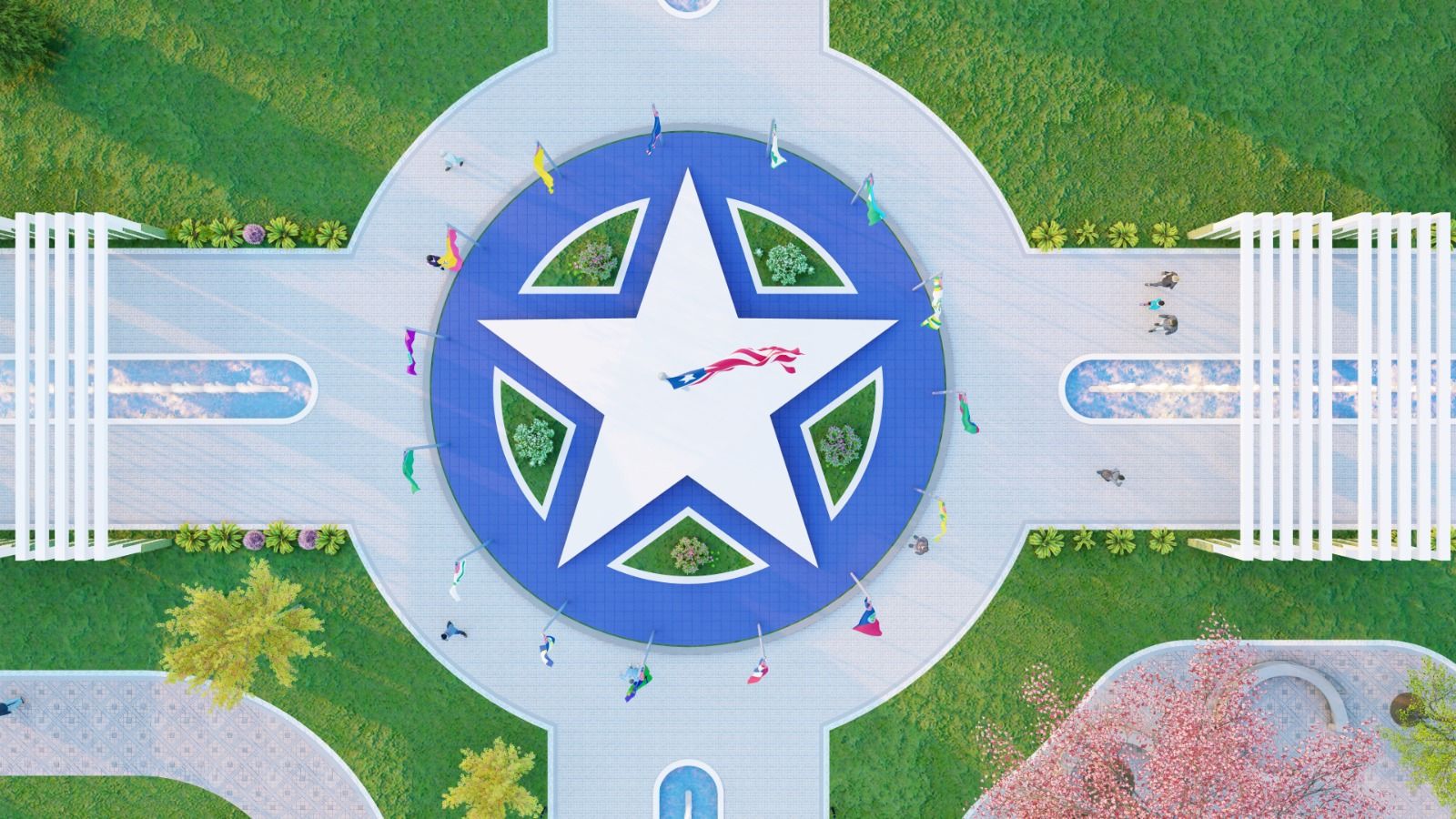
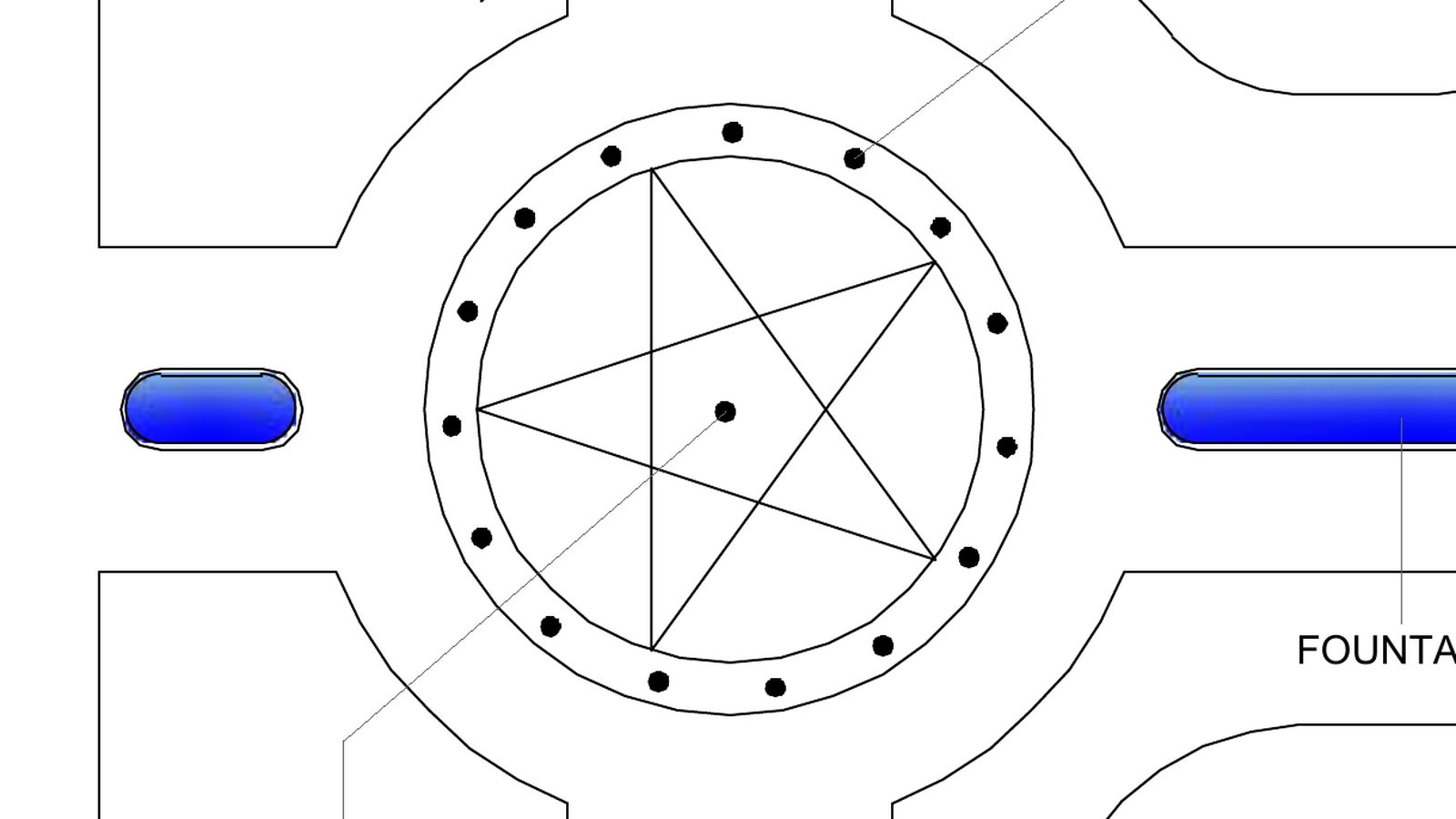
From drawing to design
The star plaza at the heart of the site, as drawn on the architects' site plan and as rendered from above. Drag the handle to compare.
Inside the museum
Five galleries in 3D
The galleries will follow the final architectural design.
Virtual Museum
Drag to look around. Use the arrows, or W A S D, to walk.
Galleries: Liberia Before the War · Years of Conflict · Hall of Names · The Road to Peace · Reconcile and Prevent. VR headset access and guided audio follow in 2027.
Video tour
Walk the museum on film
A guided video walk-through of the memorial museum concept. It opens in a new tab.
Watch the video tourRemember
A wall of 250,000
An estimated 250,000 people died in Liberia's civil wars between 1989 and 2003. Each brick in this wall stands for one of them. Touch a brick, or move across the wall, and it lights up. Tap or click to keep it lit in memory.
The names on these bricks are placeholders, not the names of real victims. As families add names to the Memorial Register, with their consent, real names will take their place.
On a keyboard: select the wall, then use the arrow keys to move and Enter to light a brick.
The Memorial Wall
Search for a loved one by name, county or community. Names are added only with families' consent and are reviewed before they appear.
Light a candle
Light a candle in memory, and leave a few words if you wish.
Understanding what happened
Liberia's two civil wars, from 1989 to 2003, cost an estimated 250,000 lives and displaced hundreds of thousands of people. This timeline is the starting point the museum's historians will build on.
Share a story
Every testimony helps Liberia remember. Survivors, families, former combatants and witnesses can all share, in writing now, and by voice and WhatsApp soon.
You choose whether your name is published, and you can withdraw your story at any time. Nothing goes public before review, and no story is published that accuses a named person.
Recalling these events can be painful. Take your time, and stop whenever you need to.

Print this poster. Visitors scan the code with their phone camera to open this page.
Learn
The war, county by county
The civil wars reached every part of Liberia. The Truth and Reconciliation Commission documented 203 massacre sites, and survivors' groups continue to find more. Choose a county to see what is recorded there and to share what happened in your community.
Known sites
Massacre and mass grave sites
The TRC recorded more than 200 mass graves across Liberia, the most in Lofa (32), River Cess (30), Grand Cape Mount (24) and Gbarpolu (18). The national human rights commission has identified 155 massacre and mass grave sites, and survivors continue to find more. Working Group 2 is mapping every site with communities. These are some that are publicly documented.
Sources: Final Report of the Truth and Reconciliation Commission of Liberia (2009), Independent National Commission on Human Rights, UN Security Council records (1993), UNDP Liberia, and reporting by FrontPage Africa, New Narratives and The New Dawn. Events are summarised for this prototype and will be reviewed by Working Group 1 historians.
Learn and research
Lesson plans, research and community programmes. Start with the history timeline and the county map.
For schools
Guided virtual tours, lesson plans and peace-education modules aligned to the national curriculum.
For universities
Research and training in memorialisation and transitional justice, with the University of South Africa (UNISA).
For communities
Offline kiosks and VR stations in county centres, so the museum reaches people beyond Monrovia.
For the diaspora
Full online access, live-streamed commemorations, and a way for Liberians abroad to share their stories.
The Digital Archive
A searchable national archive, open to the public, with protected access for researchers. Opening in 2027.
TRC records
Reports, hearings and statements of the Truth and Reconciliation Commission.
Oral histories
Recorded testimonies from all 15 counties, shared with consent.
Photographs and film
Images of the war years, the peace process and reconstruction.
Documents and artefacts
Peace agreements, letters and objects donated by families and institutions.
International partners
Learning from Rwanda and South Africa
Two nations that faced their past and built places of memory to secure their future. Their experience shapes the design of Liberia's museum.
Rwanda: memory as the foundation of unity
After the 1994 Genocide against the Tutsi, Rwanda built a national network of memorials, with the Kigali Genocide Memorial at its heart. It is the resting place of more than 250,000 victims and a centre for education and peacebuilding.
What Liberia takes from it: a names register built with families, a digital testimony archive, a national commemoration calendar, and peace education for young people.
South Africa: museums of truth and transition
After apartheid, South Africa used museums and memorial sites to tell the story of injustice and resistance. They sit alongside the work of its Truth and Reconciliation Commission.
What Liberia takes from it: museums linked to truth-commission records, former sites of suffering turned into places of learning, and visitor journeys that end in hope.
See the Chair and Co-Chair's study tour
UNDP and UNISA
The United Nations Development Programme co-chairs the Steering Committee and supports financing and technical cooperation. The University of South Africa (UNISA) supports research and training.
Exploratory mission
Learning from Rwanda and South Africa
The Chair, Hon. Hadja Mamaka Bility, and the Co-Chair, Mr. Aliou Mamadou Dia, travelled to Rwanda and South Africa to study how both nations built their memorials, museums and archives. They met with hosts there, and what they saw is shaping the design of Liberia's museum.
Photo gallery
Select a photo to view it full size. More photos will be added as the project continues.
Support the museum
Share a story or a name
Help make sure no one is forgotten. Share now.
Donate artefacts
Photographs, documents and objects that tell Liberia's story, kept with care.
Volunteer
Oral-history collection, translation, guiding and youth outreach in every county.
Partner with us
Development partners, institutions and the private sector can support construction, the archive and education.
Contact
Project Secretariat, Office of the Minister of State without Portfolio, Monrovia, Liberia. Contact details to follow.